
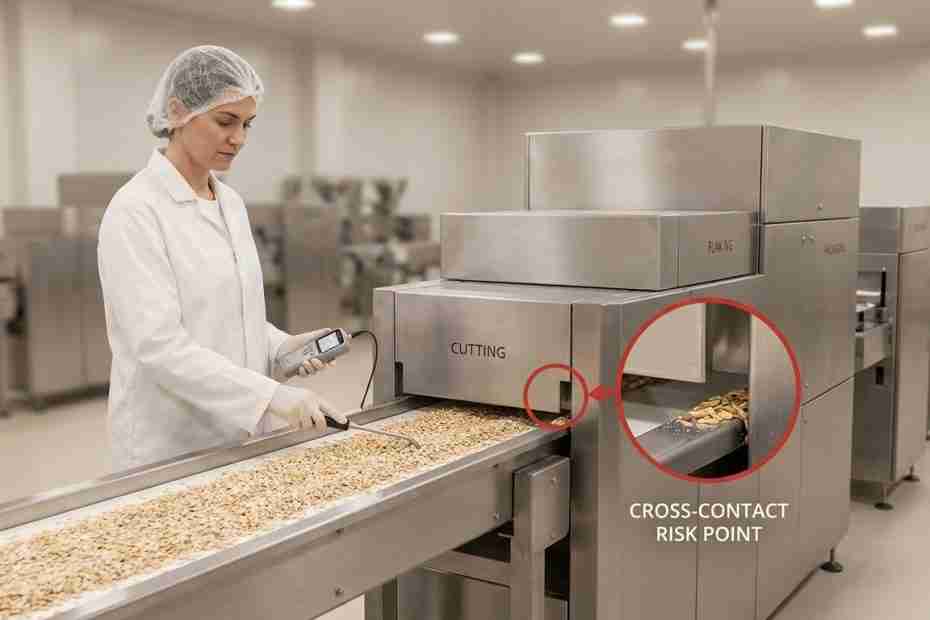
Oat processing cross-contact happens when gluten-containing grain or residue reaches oats during shared growing, transport, milling, or packing. The risk rises once oat groats move across food-contact surfaces that can hold dust, stray kernels, or residue from wheat, barley, or rye.
Oats start out naturally gluten-free, yet the finished bag on the shelf can tell a different story. If you manage celiac disease or gluten sensitivity, you need to understand where oat processing cross-contact happens, not just whether the front label says “gluten-free.” This article explains the manufacturing points that matter most, especially the stages where raw oat groats become steel-cut oats, rolled oats, and packaged products.
Why Oats Are A Challenge In The Gluten-Free World
Oats are naturally gluten-free, but they often travel through systems built for many grains. Wheat, barley, rye, and oats can move through nearby fields, shared trucks, common storage bins, and the same milling plants. A single stray gluten-containing kernel can move farther than you’d expect once grain is cleaned, cut, rolled, blended, or packed. That’s why the oat kernel itself is not the whole safety story.
For people with celiac disease, the United States Food and Drug Administration allows a “gluten-free” claim only when the finished food contains less than 20 parts per million(ppm) of gluten. That limit applies to the final product, but it doesn’t explain how the product got there. A bag of oats can meet the limit if the supplier controls risk from field to package. It can also fail if one step lets gluten-containing material enter the stream.
Testing has shown that some oat products labeled gluten-free contain detectable gluten, and some have exceeded the 20 ppm limit. That doesn’t mean every gluten-free oat product is unsafe. It means you need to look past the label and ask how the oats were sourced, processed, tested, and packaged. The safer product is usually the one with stronger controls before testing, not just testing at the end.
The Two Roads To Gluten-Free Oats: Purity Protocol Vs. Mechanical Sorting
Gluten-free oats usually come from one of two supply paths: purity protocol or mechanical sorting. Purity protocol means the oats are kept separate from gluten-containing grains through growing, harvesting, transport, storage, milling, and packaging. Mechanical sorting means oats can come from a mixed or higher-risk supply stream, then equipment removes wheat, barley, and rye kernels by size, color, or optical features. The difference matters because prevention and removal are not the same job.
Purity protocol aims to stop cross-contact before it reaches the mill. It depends on dedicated or carefully controlled fields, harvesters, trucks, bins, and processing equipment. Mechanical sorting can reduce risk, but it has limits because kernels can break, dust can spread, and gluten residue can stay on food-contact surfaces. Sorting equipment also has to identify the problem grain correctly every time, which is hard when grains are damaged or similar in appearance.
Comparative testing reported by Gluten Free Watchdog found lower rates of gluten contamination in purity-protocol oats than in mechanically sorted oats. That finding fits with food safety logic: it’s easier to keep a hazard out than to remove every trace once it has entered the system. Still, purity protocol is not magic. You should look for third-party certification, clear supplier statements, batch testing, and evidence that the processor controls cutting, flaking, and packaging lines.
Hotspot 1: The Cutting Stage For Steel-Cut Oats
Steel-cut oats are made when whole oat groats are sliced into smaller pieces. That sounds simple, but cutting creates repeated contact between oats and blades, screens, chutes, and collection points. If the same cutter has handled wheat, barley, or rye, residue can remain in seams, corners, or dull blade edges. A clean-looking machine can still hold fine dust or broken grain fragments where normal visual checks won’t catch them.
Cutting also changes how contamination behaves. Whole kernels are easier to identify and remove before processing, but once a gluten-containing kernel is cut, the pieces can become harder to spot. Small fragments may blend into the oat stream, and dust can spread across a larger amount of product. That’s one reason a processing control plan should focus on equipment history, validated cleaning, and line separation before the first oat groat is cut.
If you’re choosing steel-cut oats, don’t assume the coarse texture makes them safer. The better question is whether the brand uses dedicated gluten-free oat equipment or a validated cleanout between grain runs. Dedicated cutters reduce the number of ways residue can move into the product. Shared cutters need documented allergen cleaning validation and lot testing that fits the risk of the line.
Hotspot 2: The Flaking Stage For Rolled Oats
Rolled oats are made by steaming oat groats and flattening them through rollers. The rollers create broad surface contact, which is useful for making a consistent flake but risky if the equipment has gluten residue. Steam can soften grain particles and help material cling to surfaces, seams, scraper bars, and downstream conveyors. If wheat, barley, or rye products have run on the same system, flaking can become a major contact point.
Flaking lines can also be harder to clean than they appear. Rollers, feed gates, belts, and discharge areas can trap dust and small pieces. A fast dry sweep may remove visible material without proving gluten residue is controlled. Responsible processors use cleaning methods that match the equipment design, then verify that cleaning worked through inspection, swabbing, testing, or dedicated gluten-free scheduling.
Rolled oats are common in breakfast foods, granola, baking mixes, and snack products, so the flaking stage has wide reach. If contaminated rolled oats enter a larger recipe, the finished product inherits that risk. That’s why a brand’s oat supplier matters, not just the final manufacturer. A safe-looking ingredient panel can still depend on an upstream mill’s control of the flaker.
Hotspot 3: The Packaging And Bulk-Handling Phase
Packaging is often treated like the finish line, but it can create fresh cross-contact risk. Oats may pass through hoppers, conveyors, filler heads, scales, tote bins, scoops, and bagging equipment before they reach the package. If those surfaces also handle wheat-based cereal, barley flakes, rye grain, or multi-grain blends, gluten-containing particles can transfer into an otherwise controlled oat lot. The risk can be small in appearance and serious in outcome.
Bulk handling adds another concern because open bins and shared tools create many contact points. A scoop used for several grains can carry dust into oats. A conveyor that handles different products can leave residue along belt edges or under guards. A filler head can release older material from the prior run if the line has not been cleared and verified.
Bulk-bin oats in retail settings deserve extra caution. Even if the oats arrived gluten-free, store-level scoops, bins, and nearby products can introduce cross-contact. For a person who needs strict gluten avoidance, sealed packages from a certified source are usually easier to trust than open bulk containers. The package should protect the controlled product, not become the weak link.
What Manufacturers Do To Control Oat Processing Cross-Contact
Good manufacturers control oat processing cross-contact by separating risk before production starts. They choose lower-risk suppliers, inspect incoming oats, segregate gluten-free materials, and run gluten-free products on dedicated lines when possible. When shared equipment is used, they rely on validated cleaning rather than a quick rinse or sweep. The process has to fit the equipment, because a cutter, roller, conveyor, and packaging filler each hold residue differently.
Testing is useful, but it can’t replace prevention. Enzyme-linked immunosorbent assay(ELISA) testing can detect gluten, yet spot testing can miss uneven contamination. Gluten may appear in pockets, especially when a stray kernel breaks apart and spreads unevenly through a batch. A strong program uses supplier controls, line controls, cleaning verification, and finished-product testing together.
A responsible oat processor should know the answer to basic questions. Are the oats purity protocol or mechanically sorted? Are cutting and flaking lines dedicated to gluten-free oats? How is packaging equipment cleaned and verified? Are finished lots tested before release? If a company can’t answer those questions with plain, specific information, you have less reason to trust the label.
How To Read Labels And Choose Safer Gluten-Free Oats
A gluten-free claim tells you the product is expected to meet the legal gluten limit, but it doesn’t tell you how the oats were protected. Look for third-party gluten-free certification from a recognized program when you need higher confidence. Certification usually requires supplier review, facility controls, testing expectations, and audit steps that go beyond a brand’s front-label promise. It gives you another layer of accountability.
Terms like “purity protocol,” “dedicated gluten-free facility,” and “tested to below 20 ppm” can be useful, but they should be specific. A vague “made with gluten-free oats” statement may refer only to the ingredient, not the full processing path. A clearer label or company statement will explain sourcing, milling controls, and packaging separation. If the brand publishes its oat process, read it with cutting, flaking, and packaging in mind.
Be cautious with products made in shared facilities when the company gives no detail about line cleaning or testing. Shared facilities are not automatically unsafe, but they demand stronger controls. Also remember that some people react to oats themselves, not gluten cross-contact, because oats contain a protein called avenin. If certified gluten-free oats still cause symptoms, discuss oat tolerance with a qualified health professional.
Why Gluten-Free Oats Can Still Fail Testing
Gluten-free oats can fail testing when contamination enters unevenly or after earlier controls have worked well. One batch may contain a pocket of wheat, barley, or rye fragments that a small sample misses. Another batch may pick up residue at a packaging line after the oats passed incoming checks. That’s why final testing is necessary but limited.
A real-world recall involving oat-based cereal showed how one failure point in the oat supply chain can affect finished gluten-free products. In that case, wheat entered the oat stream and the sorting system did not remove every gluten-containing kernel. The lesson for you is practical: sorting technology helps, but it is not the same as dedicated separation. The strongest safety systems reduce the chance of contamination before sorters and tests are needed.
This is also why brand history and transparency matter. A company that explains its process, controls suppliers, uses certification, and answers technical questions gives you more usable information than a brand that relies on a single front-label claim. You don’t need to become a milling engineer. You do need enough detail to tell whether the brand treats oats as a high-risk ingredient for gluten cross-contact.
Where Does Cross-Contact Occur In Oat Processing?
- Cutting equipment with shared blades
- Flaking rollers with gluten residue
- Packaging lines with shared bins, scoops, or conveyors
The Practical Takeaway For Safer Oat Choices
Oats can fit a gluten-free diet for many people, but only when the supply chain is controlled from field to package. The highest-risk manufacturing points are the places where oat groats touch shared equipment: cutters for steel-cut oats, rollers for rolled oats, and packaging systems that move finished product into bags or boxes. Choose oats with clear gluten-free certification, specific sourcing details, and evidence of dedicated or validated equipment controls. Treat open bulk bins and vague label claims with caution, especially if you manage celiac disease. When you understand oat processing cross-contact, you can compare brands with sharper questions and choose products that match your tolerance needs.
References
- Gluten Free Watchdog: Gluten-Free Oats Research And Testing Guidance
- Gluten Intolerance Group And Gluten-Free Certification Organization: Certification Frequently Asked Questions
- Celiac Disease Foundation: Gluten In Oats
- Canadian Celiac Association: Oats Position And Safety Information
- United States Food And Drug Administration: Gluten And Food Labeling
- United States Food And Drug Administration Archived Recall Notice: Oat-Based Cereal Cross-Contact
- Bob’s Red Mill: Gluten-Free Oats Process
- Montana Gluten Free: Oat Production Process.