
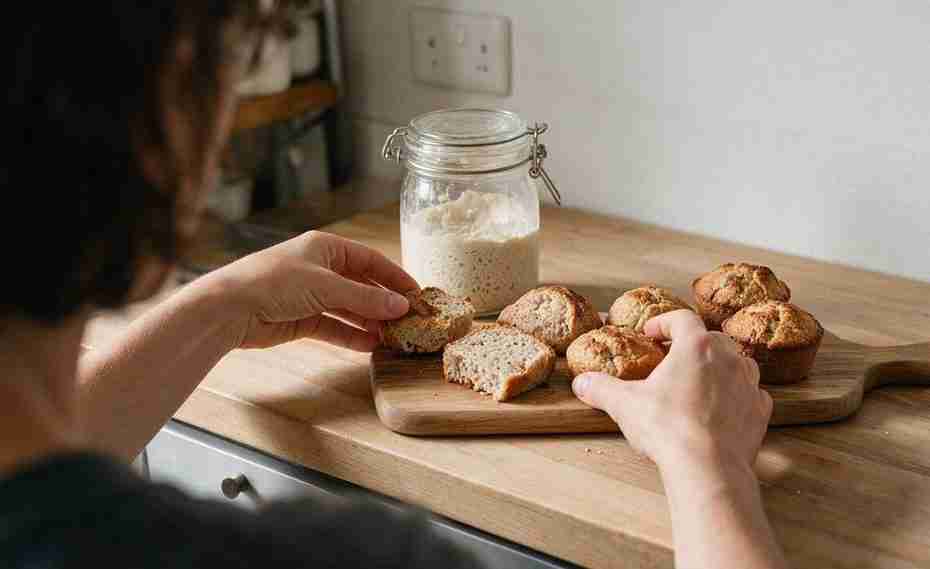
Gluten-free sourdough discard works best in quick, no-rise recipes where baking powder or baking soda provides lift and a balanced flour blend supplies structure. Used this way, your discard adds moisture and tang without forcing you to recreate the gluten network found in wheat-based baking.
The right recipe can turn an extra jar of starter into breakfast, snacks, or dessert instead of kitchen waste. This guide explains which recipes suit gluten-free sourdough discard, how to choose flour, and how to prevent gummy, dry, or crumbly results.
Why Is Gluten-Free Sourdough Discard Different From Regular Discard?
Gluten-free discard lacks the stretchy protein network that gives wheat-based dough structure. You need flour blends, binders, eggs, or another source of structure to hold moisture and keep the finished bake from falling apart.
Sourdough discard is the unfed starter removed before you feed the remaining starter. It contributes fermented flavor, acidity, and moisture, but it does not provide dependable lift. Your recipe still needs baking powder, baking soda, eggs, or a combination of these ingredients when a light texture is the goal.
The starter’s flour also affects the result. A starter made with brown rice flour can behave differently from one made with buckwheat, sorghum, millet, or a commercial blend. Its hydration matters too, since a thin starter adds more liquid than a thick one. You may need a small flour or liquid adjustment after checking the batter rather than following a wheat-based formula without changes.
Quick recipes are a practical place to use discard because they do not depend on long fermentation or a strong dough. Crackers need crispness, brownies need moisture, and pancakes rely on chemical leavening. Those jobs suit gluten-free sourdough discard far better than a free-form loaf that must support its own shape.
How Should You Store And Measure Gluten-Free Sourdough Discard?
You can refrigerate discard between baking sessions and use it cold in most quick batters. If you will not use it soon, freezing offers a practical longer-storage option.
Keep the discard in a covered, clearly labeled container so you can track what it contains. If your starter flour changes, record that detail too. A batch made with a starch-heavy blend may absorb and release moisture differently from one based on whole-grain flour.
You do not need to feed refrigerated discard before adding it to pancakes, brownies, crackers, waffles, or quick bread. Feeding is useful when you want an active starter for fermentation, but these recipes get their lift elsewhere. Stir the discard before measuring if liquid has separated on top, provided the starter shows no signs of spoilage.
Measure by weight when the recipe supplies gram amounts. Weight removes the variation caused by bubbles, settling, and different starter thicknesses. If you measure by volume, stir first and fill the measuring cup without packing it down. Established pancake and quick-bread recipes commonly use between one-half and three-quarters cup of discard per batch, but the correct quantity depends on the remaining ingredients.
What Is The Best Gluten-Free Flour Blend For Discard Recipes?
A balanced one-to-one gluten-free flour blend is the easiest choice for pancakes, muffins, quick breads, and many crackers. Look for a blend that combines whole-grain flour or rice flour with starch and a binder.
King Arthur Gluten-Free Measure for Measure Flour is designed to replace all-purpose flour by volume and already contains xanthan gum. A blend like this reduces guesswork because you do not need to calculate a separate binder for every recipe. It works best in recipes originally designed for one-to-one substitution rather than yeast bread formulas.
Single flours rarely provide everything a discard recipe needs. Rice flour can contribute structure, starch can soften the crumb, and a binder helps the ingredients hold together. Using only starch may produce a pasty or gummy center, while a large amount of coarse whole-grain flour can make the bake dry and fragile.
Check the package before adding xanthan gum separately. Doubling the gum can create a sticky or rubbery texture, especially in moist batters. If your blend has no binder, use a recipe written for that type of flour rather than guessing at the amount.
Which Gluten-Free Sourdough Discard Recipes Work Best?
The most dependable choices are recipes that need moisture, flavor, or crispness rather than gluten development. Crackers, pancakes, banana bread, brownies, and waffles give your discard a useful job without expecting it to raise the batter alone.
Crispy Gluten-Free Sourdough Discard Crackers
Crackers are one of the simplest uses because they do not need a soft crumb or tall rise. You can combine discard with a one-to-one gluten-free flour blend, olive oil or butter, salt, and seasonings. Roll the dough evenly and thinly so every section bakes at a similar rate. Uneven dough leaves the edges browned before the middle becomes crisp.
The dough should hold together without feeling wet or loose. Add flour in small amounts if it sticks to the rolling surface, since a large addition can make the crackers hard. Score the dough before baking to create clean portions, then allow the crackers to cool before judging their texture. Cooling lets remaining steam escape and helps the surface firm up.
Fluffy Gluten-Free Sourdough Discard Pancakes
Pancakes use discard for tang and moisture, not primary leavening. Baking powder, baking soda, or a tested combination creates the lift. Your batter should be thick enough to spread slowly when it reaches the pan. A thin batter tends to produce flat pancakes with weak centers.
Let the mixed batter rest briefly before cooking so the gluten-free flour can hydrate. This reduces grittiness and gives binders time to thicken the mixture. If the batter becomes too stiff during the rest, stir in a small amount of the recipe’s liquid. Cook over controlled heat so the center sets before the outside becomes too dark.
Tender Gluten-Free Sourdough Discard Banana Bread Or Muffins
Banana bread pairs well with discard because mashed banana supplies sweetness and moisture, and its flavor balances sour notes. The batter should remain thick and spoonable rather than runny. Too much banana, discard, or added liquid can leave a damp line near the bottom of the loaf.
Muffins are useful when you want shorter baking times and easy portions. Fill the cups evenly and avoid judging doneness from surface color alone. Gluten-free quick breads need enough time for the center to set, yet excessive baking dries the outer crumb. Let a loaf cool before slicing because cutting it hot can compress the soft interior and make it appear gummy.
Fudgy Gluten-Free Sourdough Discard Brownies
Brownies make good use of discard when you prefer a dense, moist texture. Chocolate also balances the fermented flavor, so older refrigerated discard does not dominate the finished dessert. The discard counts as part of the recipe’s liquid, which means you should not add it to a standard brownie formula without reducing another ingredient.
A fudgy brownie should be moist, but the center still needs to set. Measure carefully and avoid adding extra starch to make the batter look like wheat-based brownie batter. Gluten-free batter may have a different appearance before baking. Cool the pan before cutting so the crumb can firm and produce cleaner portions.
Golden Gluten-Free Sourdough Discard Waffles
Waffles use many of the same ingredients as pancakes, but they benefit from a batter designed to become crisp at the edges. Fat supports browning and helps the cooked waffle release from the iron. A properly preheated waffle iron also reduces sticking and pale, soft surfaces.
Avoid pouring so much batter that the iron cannot vent steam. Trapped moisture can leave the center heavy and the outside limp. Place finished waffles on a wire rack rather than stacking them, since stacking traps steam. You can reheat cooled waffles until the exterior becomes crisp again.
Can You Add Discard To A Regular Gluten-Free Recipe?
You can adapt some gluten-free recipes, but you need to account for the flour and water already present in the starter. Dedicated discard recipes are more dependable because their ingredient ratios already include that extra flour and moisture.
Do not treat discard as a flavoring that can be added without changing anything else. If you add a large portion to an existing batter, the result may become too wet, too acidic, or too dense. You need to reduce some of the original flour and liquid while preserving the recipe’s intended consistency.
The starter’s hydration determines how much adjustment is needed. A starter containing similar weights of flour and water contributes both components in roughly equal proportions, but home starters often vary. Check how the batter moves, spreads, or holds a scoop instead of relying only on cup measurements.
Begin with forgiving recipes rather than delicate cakes or shaped pastries. Muffins, pancakes, brownies, and snack cakes tolerate modest consistency adjustments. Record every change, including the discard amount and flour blend, so you can repeat the result instead of rebuilding the recipe from memory.
How Can You Make Discard Recipes Dairy-Free, Vegan, Or Gum-Free?
You can often make a discard recipe dairy-free by replacing milk and butter with suitable plant-based alternatives. Vegan and gum-free changes require more care because eggs and binders often supply much of the missing structure.
For dairy-free baking, choose an alternative that matches the original ingredient’s job. Neutral oil can replace melted butter in many crackers, brownies, and quick breads, but it will change the flavor and may soften crisp recipes. Plant-based milk can work in batters when its thickness is close to the dairy milk specified by the recipe.
Egg replacement is less predictable. Eggs bind ingredients, support lift, hold moisture, and help the center set. A substitute that works in a dense brownie may not create a fluffy pancake or stable muffin. Use a recipe developed for egg-free baking instead of removing multiple eggs from a standard formula.
If you avoid xanthan gum, look for recipes that use psyllium husk or another tested binding method. Crackers can sometimes work without gum because they do not need a tender, flexible crumb. Pancakes and quick breads need stronger support, especially when the batter contains a large amount of discard. Do not remove a binder unless the recipe explains how structure will be supplied.
Why Do Gluten-Free Discard Recipes Turn Gummy, Crumbly, Or Flat?
Gummy results usually come from excess moisture, too much binder, incomplete baking, or slicing before the crumb sets. Crumbly results point toward too little binder, poor hydration, or a flour blend that lacks enough starch.
If the center is gummy, compare the discard consistency with the one expected by the recipe. A runny starter contributes more water and can loosen the batter beyond the intended level. Confirm whether the flour blend already contains xanthan gum, then allow breads and brownies to cool before cutting.
When a bake crumbles, review the flour blend before adding more liquid. A single gluten-free flour may lack the starch and binder needed to hold the crumb together. Give the batter enough resting time to absorb moisture, then check that all substitutions match the original recipe’s purpose.
Flat pancakes and waffles often come from weak or missing chemical leavening, a batter that is too thin, or cooking equipment that is not fully heated. Discard does not replace baking powder or baking soda in quick recipes. Measure the leavener accurately and cook a small test portion before adjusting the full bowl.
Strong sourness can be managed through recipe choice. Banana, chocolate, warm spices, salt, and savory seasonings pair naturally with fermented flavor. If your discard tastes sharper than usual, use it in brownies, banana bread, or seasoned crackers rather than a mildly flavored bake.
What Can You Make With Gluten-Free Sourdough Discard?
- Gluten-free sourdough discard crackers
- Gluten-free sourdough pancakes
- Gluten-free sourdough banana bread
- Gluten-free sourdough brownies
- Gluten-free sourdough waffles
Make Every Starter Feeding Count
Your starter becomes easier to maintain when the discard has a planned destination. Choose quick recipes that rely on chemical leavening, use a balanced flour blend, and measure the discard as part of the recipe’s flour and liquid. Crackers offer the simplest starting point, and pancakes, waffles, banana bread, and brownies give you flexible options for later batches. Once you record which flour blend, consistency, and recipe work in your kitchen, gluten-free sourdough discard stops feeling like waste and becomes a useful baking ingredient.