
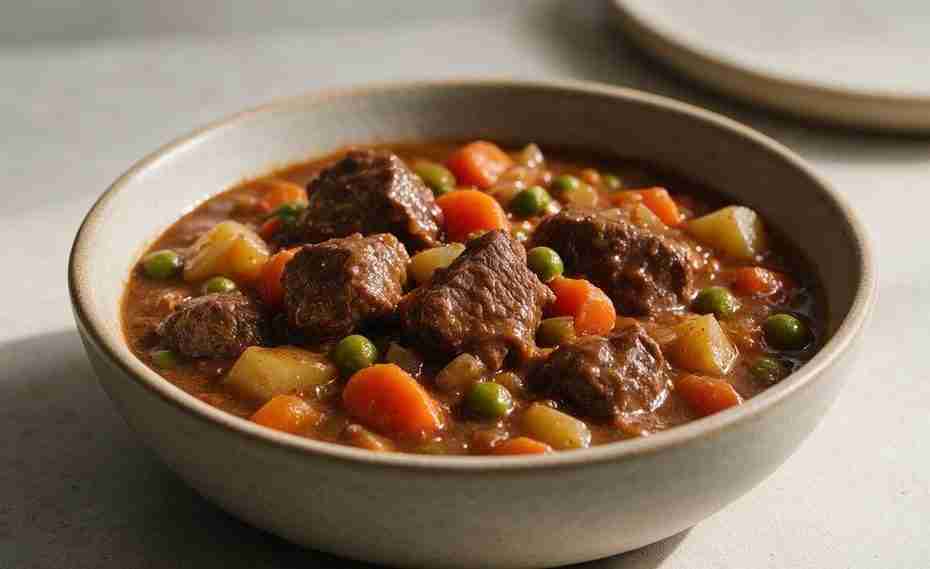
You can make gluten-free beef stew with deep flavor and spoon-coating gravy by browning the beef well, building natural body from collagen, and adding the right thickener at the right time. Wheat flour isn’t required when you control moisture, heat, and thickener timing.
The gravy is often the hardest part to recreate because removing wheat flour can leave the broth thin, glossy, gritty, or lumpy. You’ll learn how different gluten-free thickeners behave, when to add them, and how to adapt the method for a stovetop, slow cooker, or pressure cooker. You’ll also see how to check broth, sauces, and seasonings for hidden gluten.
Is Traditional Beef Stew Gluten-Free?
Traditional beef stew isn’t automatically gluten-free. The beef, potatoes, carrots, onions, and many herbs are naturally free from gluten, but wheat flour is commonly used to coat the meat or thicken the gravy.
Packaged ingredients can create another problem. Beef broth, bouillon cubes, seasoning packets, and Worcestershire sauce may contain wheat ingredients, barley malt, or other gluten sources. A product labeled wheat-free may still contain gluten from barley or rye, so the ingredient list and gluten-free label matter.
If you’re cooking for someone with celiac disease, swapping the flour is only part of the job. Shared cutting boards, strainers, wooden spoons, opened condiment jars, and cookware with baked-on residue can introduce cross-contact. Clean preparation surfaces and separate utensils help keep the stew safe.
Why Does Wheat Flour Make Beef Stew Gravy Thick?
Wheat flour thickens stew because its starch granules absorb liquid and swell during cooking. It also produces an opaque gravy that coats beef and vegetables instead of running to the bottom of the bowl.
Traditional recipes often dust beef with flour before browning it. Some recipes cook flour in fat to make a roux, then whisk in broth. These methods distribute starch throughout the pot, but browning and roux preparation can be recreated with gluten-free ingredients.
Flour isn’t responsible for all of the gravy’s body. Beef chuck contains collagen that converts to gelatin during slow cooking, giving the liquid a silky texture. Browning the beef, deglazing the pot, simmering the stew, and reducing excess liquid also build a richer gravy before any starch enters the pot.
What Can You Use Instead Of Wheat Flour To Thicken Beef Stew?
Cornstarch, gluten-free all-purpose flour, sweet rice flour, arrowroot, tapioca starch, potato starch, and mashed vegetables can all thicken stew. The right choice depends on the finish you want and how long the stew will remain over heat.
Cornstarch has about twice the thickening strength of wheat flour and creates a smooth, slightly glossy gravy. A gluten-free flour blend produces a more opaque, flour-style finish, and many blends can replace wheat flour in a roux at a one-to-one ratio. Sweet rice flour is another useful choice for smooth sauces because it has a mild flavor and is less likely to taste gritty when cooked properly.
Arrowroot and tapioca starch create a glossy finish and work best when added late. Prolonged boiling can weaken their thickening effect or make the texture less pleasant. Mashed potatoes and carrots offer a starch-free-from-a-package option, though they produce a more rustic gravy.
Gluten-Free Beef Stew Thickener Comparison
|
Thickener |
Gravy Finish |
Best Time To Add |
Key Consideration
|
|
Cornstarch |
Smooth and glossy |
During the last 10 minutes |
Mix with cold water before adding |
|
Gluten-Free Flour Blend |
Opaque and similar to flour gravy |
Before adding broth or near the end as a slurry |
Choose a blend intended for general cooking |
|
Sweet Rice Flour |
Smooth and neutral |
In a roux or slurry |
Cook long enough to remove the raw starch taste |
|
Arrowroot |
Glossy and light |
Near the end |
Avoid prolonged boiling |
|
Tapioca Starch |
Glossy with strong cling |
Near the end |
Too much can create a stretchy texture |
|
Mashed Vegetables |
Rustic and opaque |
After the vegetables are tender |
Changes the texture more than purified starch |
How Do You Make Rich Gluten-Free Beef Stew Gravy?
Start by drying the beef and browning it in small batches. Crowding the pot traps steam, which turns browning into simmering and limits the flavorful browned residue that should form on the bottom.
Remove each browned batch before adding more beef. Once the meat is browned, cook the onions in the same pot and scrape up the browned areas with gluten-free broth or another recipe liquid. This deglazing step moves concentrated flavor into the gravy instead of leaving it stuck to the cookware.
Add the beef, vegetables, herbs, and enough liquid to cook them without flooding the pot. Keep the stew at a gentle simmer until the beef is tender and the connective tissue has softened. Strong boiling can toughen the meat, break delicate vegetables apart, and reduce the liquid too quickly.
Check the consistency only after the beef and vegetables are cooked. Remove excess surface fat, add your chosen slurry gradually, and simmer just long enough to activate it. Let the stew rest briefly before deciding whether it needs more thickener because the gravy often gains body as it cools.
How Much Cornstarch Should You Use To Thicken Beef Stew?
A practical starting point is 1 tablespoon of cornstarch mixed with 2 tablespoons of cold water for each cup of broth you want to thicken. The exact amount can change with the quantity of gelatin, potatoes, vegetables, and reduced liquid already in the pot.
Always mix cornstarch with cold water before it touches the hot stew. Stir until the mixture is smooth, then pour it into the gently simmering liquid in a thin stream. Adding dry cornstarch directly to hot broth creates small clumps with dry centers that are difficult to remove.
Add part of the slurry first rather than pouring in the full amount at once. Simmer the stew for several minutes, stir, and check how the gravy coats a spoon. Add more slurry only when the gravy remains thinner than you want.
Cornstarch can create a jelly-like texture when too much is used. You can avoid that result by allowing beef gelatin, vegetable starch, and reduction to contribute body before adding the slurry. A modest amount of cornstarch should support the gravy, not become its dominant texture.
Which Thickener Works Best For Each Cooking Method?
The best gluten-free gravy thickener depends on when you can access the cooking liquid. Stovetop cooking gives you the most control, and slow cookers and pressure cookers work better when you thicken the stew after the beef is tender.
Stovetop Beef Stew
For stovetop stew, you can use a gluten-free roux at the beginning or a slurry near the end. A flour blend or sweet rice flour gives you an opaque gravy, and cornstarch provides a faster finish. Simmering uncovered before adding starch also reduces water and concentrates flavor.
Slow Cooker Beef Stew
Slow cookers retain moisture, so the stew may contain more liquid than a stovetop version. During the last part of cooking, stir in a cornstarch slurry, replace the lid, and allow the gravy to thicken. You can also mash a portion of the cooked potatoes and carrots into the broth before adding any starch.
Arrowroot and tapioca should be added late because extended heat can weaken their performance. If the gravy remains watery, transfer some liquid to a saucepan, thicken it there, and return it to the slow cooker. This gives you better heat control without overcooking the beef.
Pressure Cooker Beef Stew
Don’t add a large amount of starch before pressure cooking because thickened liquids can interfere with circulation and may scorch. Cook the beef and vegetables in an unthickened or lightly thickened liquid, release the pressure according to your recipe, and switch to the sauté setting after opening the cooker.
Add the slurry gradually while the liquid simmers. Stir near the bottom to prevent sticking, and stop adding starch once the gravy coats the beef and vegetables. Allow a short resting period before serving so the consistency can settle.
Why Is Your Gluten-Free Gravy Thin, Lumpy, Or Gritty?
Thin gravy usually means there is too much liquid, too little thickener, or insufficient heat after the thickener was added. The stew may also need more time for the beef collagen to soften and give the broth natural body.
Before adding extra starch, simmer the uncovered stew to reduce excess liquid. You can also mash several cooked potato or carrot pieces into the broth. Once you’ve reduced the liquid, add a small slurry and check the texture again.
Lumps develop when starch isn’t dispersed before meeting hot liquid. Mix your thickener with cold water or cool broth until smooth, then stir it into the simmering stew. Keep stirring as the gravy thickens so the starch spreads throughout the pot.
A gritty or chalky taste often comes from uncooked gluten-free flour or too much powdered thickener. Flour blends and sweet rice flour need enough cooking time to lose their raw flavor. Cornstarch, arrowroot, and tapioca need less cooking, but using too much can leave the gravy glossy, gummy, or stretchy.
How Do You Make Sure Gluten-Free Beef Stew Is Safe To Eat?
Check every packaged ingredient rather than judging by its name. Broth, bouillon, Worcestershire sauce, seasoning blends, gravy bases, cooking sauces, and starch products should carry a gluten-free label when you’re cooking for someone who must avoid gluten.
Food labeled gluten-free in the United States must contain less than 20 parts per million of gluten. Wheat-free wording doesn’t offer the same assurance because the product could contain barley, rye, or ingredients derived from those grains. Recheck familiar products when you purchase them because ingredient formulas can change.
Prevent cross-contact by cleaning the counter, cookware, utensils, and handles before cooking. Use an unopened or uncontaminated jar of seasoning if the household normally dips flour-covered spoons into shared containers. Avoid wooden tools and scratched equipment that are difficult to clean when they have previously been used with wheat flour.
Keep the finished gluten-free beef stew away from regular bread, flour-thickened gravy, and shared serving utensils. Use a dedicated ladle and serve gluten-free accompaniments separately. These steps matter as much as choosing the correct thickener when you’re preparing food for someone with celiac disease.
How Do You Thicken Gluten-Free Beef Stew Without Flour?
- Brown the beef well to build flavor and natural body.
- Mix 1 tablespoon cornstarch with 2 tablespoons cold water per cup of broth, then stir it in during the last 10 minutes.
- Or mash cooked potatoes and carrots into the stew, then simmer uncovered.
Build The Gravy Before Reaching For More Starch
Rich gravy comes from the full cooking process, not a large dose of thickener. Brown the beef in batches, deglaze the pot, use collagen-rich chuck, and control the amount of liquid before adjusting the final consistency. Choose cornstarch for a quick, smooth finish, a gluten-free flour blend for an opaque flour-style gravy, or mashed vegetables for a rustic result. Check every packaged ingredient and prevent cross-contact when the meal needs to be suitable for celiac disease. With those choices in place, your gluten-free beef stew can have the deep flavor and spoon-coating texture associated with a traditional wheat-flour gravy.
References
- United States Food and Drug Administration: Gluten and Food Labeling
- Celiac Disease Foundation: Celiac Disease Fast Facts
- Beyond Celiac: Reading Gluten-Free Food Labels
- King Arthur Baking: Gluten-Free Flour Guide
- Bob’s Red Mill: Arrowroot Powder Versus Cornstarch
- The Spruce Eats: How To Use Cornstarch To Thicken Sauces
- Mayo Clinic: Gluten-Free Diet
- National Celiac Association: Celiac Disease Questions.