
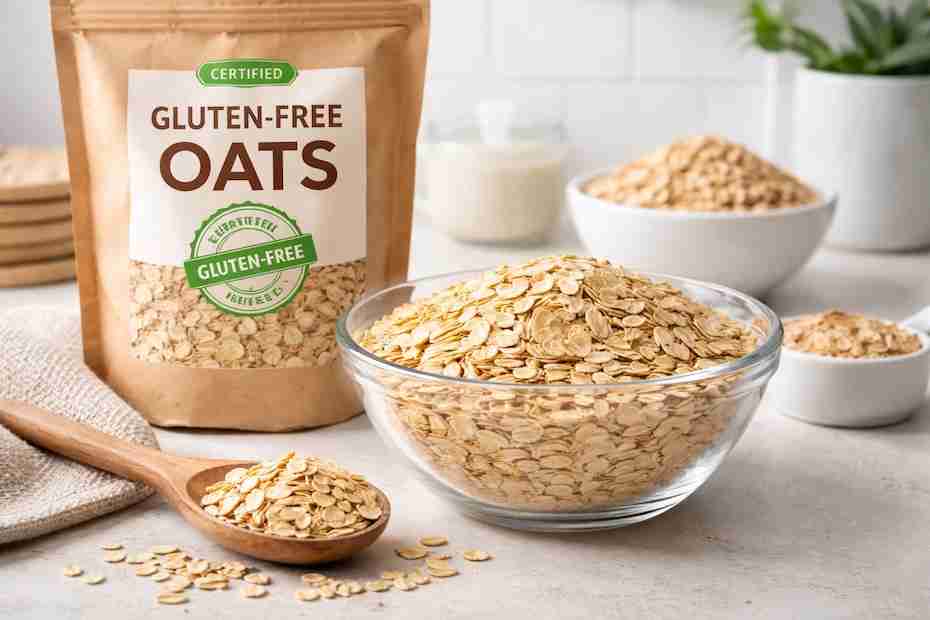
People with celiac disease can tolerate certified gluten-free oats in many cases, yet a small subset reacts to the oat protein avenin and should avoid oats altogether.
This guide gives you a precise, evidence-driven way to decide whether oats belong in your gluten-free plan. You’ll learn how avenin behaves in the celiac immune response, how contamination changes risk, and how to evaluate tolerance with discipline rather than guesswork.
What is avenin, and why does it matter for celiac disease?
Avenin is the storage protein in oats, and it explains why oats are debated in celiac nutrition. It shares partial structural similarities with gluten proteins but behaves differently in most immune systems affected by celiac disease.
From a biochemical standpoint, avenin lacks many of the peptide sequences that reliably activate celiac-specific T-cells. That distinction explains why controlled studies repeatedly show normal intestinal histology in many patients consuming pure oats. Yet avenin is not inert. In a small percentage of people with celiac disease, immune recognition occurs and symptoms follow.
Understanding avenin shifts the discussion away from blanket rules. Oats are not “secretly gluten,” and they are not universally safe. They sit in a narrow middle ground that requires informed decision-making and structured monitoring.
Are oats naturally gluten-free, or is contamination the real risk?
Oats are naturally gluten-free; contamination is the primary risk factor. Most oat-related reactions trace back to wheat, barley, or rye entering the supply chain during farming, transport, or processing.
Standard commercial oats frequently exceed safe gluten thresholds due to shared equipment. Certified gluten-free oats follow controlled growing, harvesting, and milling practices designed to prevent that exposure. This distinction matters more than brand marketing or ingredient lists.
When evaluating oats, certification and testing protocols carry more weight than labels that simply claim “no gluten ingredients.” Without verified controls, the probability of cross-contact remains high enough to trigger intestinal injury in celiac disease.
Why do some people with celiac disease react to pure oats?
A small subset reacts to avenin itself, independent of contamination. This reaction reflects immune variability rather than diet failure.
Clinical research shows that some individuals mount a T-cell response to avenin peptides. In certain cases, symptoms mirror gluten exposure, while others experience subtler signs that only appear on follow-up testing. This variability explains why oats work well for many yet cause consistent problems for others.
From a practical standpoint, this means tolerance cannot be assumed. Oats demand a trial period with clear rules, defined portions, and outcome tracking rather than casual inclusion.
How should oats be introduced on a gluten-free diet?
Oats should only be introduced after the gluten-free diet is stable and symptoms are controlled. This timing prevents confusion between gluten exposure and oat response.
Start with certified gluten-free oats only. Introduce small portions and keep intake consistent for several weeks rather than sporadic. This pattern makes symptom assessment more reliable and limits confounding variables.
Digestive discomfort during early intake does not always indicate immune reactivity. Oats increase fiber load, which can cause temporary bloating. Persistent symptoms, fatigue, or gastrointestinal distress deserve medical review rather than dietary guessing.
How much gluten-free oats is considered safe?
Moderate portions are the standard reference point. For adults, that generally means 50–70 grams of dry oats per day, introduced gradually.
Children require smaller amounts based on body size and tolerance. Exceeding recommended portions increases fiber burden and complicates interpretation if symptoms appear.
Portion discipline matters. Large servings can mask the difference between fiber adjustment and immune response, leading to unnecessary restriction or prolonged exposure.
Do different oat varieties change tolerance?
Yes, oat varieties differ in avenin composition, and tolerance may vary. Research shows that not all oat strains behave identically at the protein level.
Some certified producers select oat varieties with lower immunogenic potential, which may explain why certain brands succeed when others fail for the same individual. This variation supports rotation and cautious brand changes rather than assuming all gluten-free oats perform the same way.
If symptoms appear after a brand switch, reverting to a previously tolerated product provides useful information before eliminating oats entirely.
What does long-term research say about oats and intestinal health?
Long-term studies show no intestinal damage in most people with celiac disease who consume pure oats. Follow-up biopsies often demonstrate preserved villous architecture and normal antibody levels.
That outcome supports oats as a legitimate nutritional option rather than a short-term experiment. Fiber intake improves bowel regularity, nutrient density improves, and dietary variety expands without compromising disease control for most.
Yet research also confirms the minority response. Long-term safety depends on individual immune behavior, not averages. Monitoring remains essential, especially during the first year of oat inclusion.
When should oats be avoided completely?
Oats should be avoided when symptoms persist, antibodies rise, or intestinal healing stalls. These signals override theoretical benefits.
People with refractory symptoms, newly diagnosed patients still stabilizing, or those with confirmed avenin sensitivity benefit from oat exclusion. A gluten-free diet remains nutritionally complete without oats when planned correctly.
Avoidance is not failure. It represents accurate personalization based on immune response rather than adherence to generalized advice.
Practical checklist for evaluating oat tolerance
- Use certified gluten-free oats only
- Introduce oats after symptom stability
- Start with small, consistent portions
- Track symptoms over several weeks
- Reassess with professional testing if concerns appear
Can people with celiac disease eat oats?
- Yes, if oats are certified gluten-free
- A small group reacts to avenin
- Introduce slowly and monitor response
Make a confident decision, not a cautious guess
Oats can expand nutrition and dietary satisfaction for many people with celiac disease, yet they demand a disciplined approach rooted in evidence rather than assumption. Avenin explains why tolerance varies, and contamination explains most early failures. When you evaluate oats with structure, portion control, and follow-up, you gain clarity instead of confusion. The goal is not universal inclusion or exclusion; the goal is sustained intestinal health with informed flexibility. That standard keeps your gluten-free strategy precise, durable, and aligned with how celiac disease actually behaves.
If you value clear, research-anchored breakdowns like this, explore more in-depth nutrition and health analysis on my Medium profile—each piece is built to help you make decisions with confidence rather than restriction.