
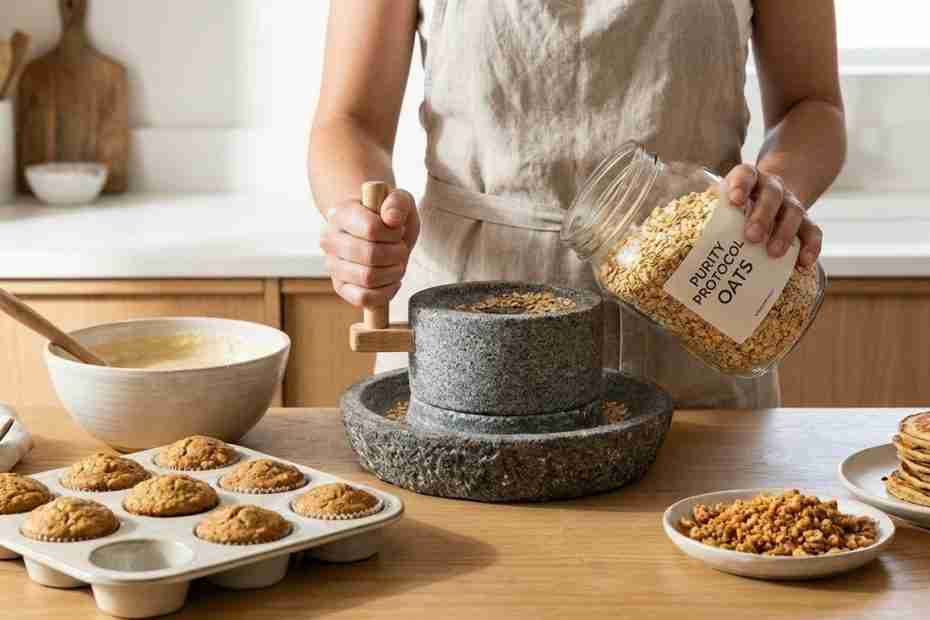
Purity Protocol oats work far beyond breakfast: you can mill them into oat flour, turn them into crisp toppings, use them as a binder, or build savory coatings and thickeners that perform like classic pantry staples.
This guide gives you seven creative, repeatable ways to cook and bake with Purity Protocol oats, plus the process details that matter for texture and consistency. You’ll get practical ratios, handling tips, and the specific “why it works” notes that prevent dry muffins, gummy pancakes, or bland coatings.
What Are Purity Protocol Oats, And Why Do They Matter In Baking?
Purity Protocol oats are produced through a controlled system designed to prevent gluten cross-contact across the supply chain. That means the work starts before harvest and continues through transport, storage, cleaning, and milling, instead of relying only on removing gluten grains later with sorting equipment. When a supplier follows a strict program, you get a more predictable input ingredient, and predictability is what makes recipe testing pay off.
Avena Foods describes its program as a “Start Safe, Stay Safe” process with multiple controls from seed selection through milling, paired with rigorous sampling and lot testing. Avena also states gluten levels are “virtually undetectable” at <5 ppm for many ingredients, with oat flours called out separately at <10 ppm. This matters in baking because flour is what you use most heavily by weight, so a brand’s flour specification, testing approach, and traceability standards are the details that actually influence buying decisions and recipe repeatability.
Can You Bake With Purity Protocol Oats Without Dry, Crumbly Results?
Yes, and the fix is operational, not mysterious: oats absorb more water than wheat flour and they don’t create gluten structure, so you must manage hydration and structure on purpose. When a bake turns sandy or crumbly, it’s usually because the batter is under-hydrated, the flour portion is too high, or the binder system is weak for the bake time and pan size.
Control texture by choosing the right “oat form” for the job. Rolled oats add chew and visible structure, quick oats blend in and soften faster, and oat flour gives tenderness but can drink up liquids quickly. King Arthur Baking notes oat flour can replace up to about half the flour in many non-yeasted recipes, a practical ceiling that keeps structure intact while still giving oat flavor and softness.
In day-to-day production kitchens, the most reliable approach is to keep one lever for structure and one lever for moisture. Structure usually comes from eggs, yogurt-style ingredients, or a measured gluten-free binder if needed, and moisture comes from fruit, dairy, oils, or a controlled rest time that allows oat flour to hydrate before baking. Once those levers are in place, oat-based muffins, snack cakes, cookies, and pancakes stop feeling “fragile” and start behaving like dependable staples.
How Do You Make Oat Flour From Purity Protocol Rolled Oats, And Does It Swap 1:1?
You can make oat flour by blending rolled oats into a fine powder, then storing it airtight. Food Network’s method is straightforward: blend rolled or quick oats for about 15–20 seconds until powdery, then store at room temperature. That process gives you flour fast, keeps costs down, and lets you convert one bag of Purity Protocol oats into multiple formats.
A true 1:1 swap is not the default, and the reason is particle size and absorption. Home-milled oat flour often runs a little coarser, which can create a grainy bite and uneven hydration if you mix and bake immediately. Treat oat flour like a “rest-and-finish” ingredient: mix the batter, then let it sit 10–15 minutes so the flour hydrates before you judge thickness. That single step prevents under-hydrated centers and reduces the temptation to overmix.
For consistent results across batches, measure by weight whenever possible. Oat flour can pack differently depending on grind, humidity, and storage time, and volume cups swing more than most people expect. When the bake matters, lock in grams, rest the batter, then make final adjustments with liquid in tablespoons, not by adding more flour until everything turns stiff.
Creative Way 1: Build Oat Flour Pancakes That Stay Tender And Freeze Cleanly
Oat flour pancakes are one of the fastest wins because the format is forgiving and the cook time is short. You get strong oat flavor without waiting for a loaf to cool or a cake to set, and you can tune thickness on the fly. The main performance goal is a batter that pours, holds shape, and sets before it dries out, and that means managing hydration and rest.
Run a simple production workflow: blend Purity Protocol rolled oats into flour, mix the batter, then rest it briefly so the flour hydrates. If the batter thickens too much, thin it with small amounts of milk or water until it pours in a steady ribbon. If it spreads too quickly and turns flat, add a tablespoon or two of oat flour, then wait a few minutes before reassessing, since oat flour continues to absorb liquid after mixing.
For freezer-friendly pancakes, focus on moisture retention and clean release. A bit of yogurt-style ingredient or mashed banana improves tenderness, and a moderate fat level keeps reheated pancakes from turning brittle. Cool pancakes fully, stack with parchment, and freeze flat, then reheat from frozen in a toaster oven or skillet for a better texture than microwaving.
Creative Way 2: Turn Rolled Oats Into A Crisp Topping That Stays Crunchy
A good oat crisp topping is controlled contrast: crunchy top, soft fruit underneath, and no soggy middle layer. Rolled oats are ideal because they hold texture, brown well, and absorb fruit juice without turning into a single doughy sheet. The operational mistake is using too much sugar or too much butter without balancing dry ingredients, which causes melt-and-soak instead of crisp-and-crunch.
For reliable crunch, treat your topping like a dry mix with a measured fat binder. Combine rolled oats with a dry sweetener, salt, and spice, then cut in butter or use oil until it looks like damp sand with small clumps. Press lightly over fruit rather than packing it hard, since tight packing steams the topping and reduces browning.
Control bake placement and timing the same way a pastry chef would. Bake in the upper third of the oven for stronger browning, and let the crisp cool before serving so the topping firms up. If the fruit is extremely juicy, thicken it slightly before baking or add a small amount of starch so the bottom doesn’t bubble into the topping and soften it.
Creative Way 3: Use Oats As A Savory Binder For Meatballs, Burgers, And Veggie Patties
Oats work as a binder because they absorb moisture, hold fat, and set into a cohesive matrix during cooking. Breadcrumbs do the same job, but oats are easier to keep gluten-controlled when sourced through a strict system. The best results come from choosing the right grind: a coarse grind keeps texture, and a finer grind behaves more like classic crumbs.
For meatballs and burgers, pulse rolled oats a few times so they become a coarse meal, then mix with your protein, seasonings, and a moisture source like egg and onion. Let the mixture rest briefly so the oats hydrate, then shape and cook. That rest time is what keeps patties from cracking during flipping and what keeps meatballs from shedding bits into the pan.
For veggie patties, oats solve a different problem: excess moisture. Beans, shredded vegetables, and cooked grains release water as they heat, and oats absorb that water before the patty collapses. Use oats to stabilize the mix, then bake or pan-sear until a firm crust forms, since the crust is what gives the patty strength for serving.
Creative Way 4: Make A Crisp Oat Coating For Chicken, Fish, Or Tofu In The Oven Or Air Fryer
Oat “breading” performs when you treat it like a seasoned crumb system, not like raw rolled oats thrown on top. The target is a coating that adheres, browns, and stays crisp after resting for a few minutes. That means you need a tacky layer, a crumb with the right size, and enough seasoning to carry flavor through baking.
Build the crumb by pulsing rolled oats into a coarse, panko-like texture, then season aggressively with salt, paprika, garlic, pepper, and any dried herbs you use regularly. Set up a simple station: dry crumb, a wet binder (egg wash or a thick dairy-free alternative), and your protein patted dry. Press the crumb on firmly, then let the coated pieces sit a few minutes before cooking so the coating hydrates slightly and bonds.
For oven baking, use a preheated sheet pan and a light oil spray to drive browning. For air frying, don’t crowd the basket, since airflow is what crisps the surface. Once cooked, rest briefly on a rack instead of a plate so steam doesn’t soften the coating from underneath.
Creative Way 5: Thicken Soups, Stews, And Chili With Quick Oats Or Oat Flour
Oats thicken liquids by releasing starches and soluble fiber as they hydrate and heat. This gives you a body similar to a light roux without needing wheat flour, and it also adds a subtle grain richness that works well in vegetable soups and chili. The biggest operational risk is dumping in too much at once, which can create gumminess and mask flavors.
Use quick oats for the cleanest integration when you want thickness without visible pieces. Stir them in gradually, simmer, then reassess after several minutes because thickening increases with time. For oat flour, whisk it into a small amount of cool broth first to prevent clumping, then stream it into the pot while stirring.
Keep flavor clarity by seasoning in stages. Oats mute acidity and spice slightly as they thicken, so finish with salt, acid, and heat after the soup reaches final body. If the soup tightens too much after cooling, loosen it with broth during reheat, since oat-thickened soups often set more firmly overnight.
Creative Way 6: Bake Moist Muffins And Snack Cakes With Oat Flour That Hold Together
Oat flour shines in muffins and snack cakes because those bakes reward tenderness and moisture. The goal is a crumb that slices cleanly and doesn’t crumble after cooling, and that comes from hydration, fat balance, and a binder that matches the bake time. If oat flour has disappointed in the past, the recipe likely needed more moisture or a longer rest before baking.
Build structure with eggs and a thick dairy component, then pair with a naturally moist ingredient like pumpkin, banana, applesauce, or shredded zucchini. Mix until just combined, rest the batter, then bake to a firm set with a clean tester. Cooling matters more than most people think: oat-based bakes continue to set as they cool, and cutting too early makes the crumb seem weak.
For a clean, “professional” finish, control pan prep and portioning. Line tins or grease consistently, and portion batter evenly so bake times stay aligned across the tray. Once baked, cool on a rack, then store airtight to prevent drying, since oat flour bakes can lose softness quickly when left exposed.
Creative Way 7: Produce No-Bake Bars And Fridge Cookies With Better Slice And Bite
Rolled oats are a core structure ingredient in no-bake bars because they absorb syrups and nut butters, then set into a stable chew once chilled. The success metric is a bar that slices without crumbling and doesn’t leak oil at room temperature. That’s controlled by the ratio of dry oats to binder and by how thoroughly the oats are coated.
For no-bake bars, heat the binder just enough to flow, then mix aggressively so every oat is coated. Press firmly into a lined pan, chill until fully set, then slice with a warm knife for clean edges. If the bars feel greasy, increase oats or add a small portion of oat flour to stabilize the fat phase.
For fridge-style dough cookies or baked oat cookies, use a blend of rolled oats and oat flour. Rolled oats deliver chew and visual texture, while oat flour fills gaps and improves slice integrity. Chill the dough before portioning, then bake until the edges set, since overbaking dries oat-based cookies faster than wheat-based versions.
Are Purity Protocol Oats Safe For Celiac Disease, And Why Do Some People Still Avoid Oats?
Purity Protocol programs are designed to reduce gluten cross-contact, and Avena states its system uses rigorous sampling, lot testing, and traceability with gluten results often reported below typical “gluten-free” thresholds. That said, people managing celiac disease still debate oats in real life, and that debate usually comes down to two practical issues: cross-contact risk across the market and individual reactions to oats even when gluten is controlled.
Gluten Free Watchdog has published extensive oat coverage over the years, including discussion of production methods and, in more recent updates, public cautions about gluten-free oats. Their site also documents that not all “gluten-free” oats are created the same, separating purity protocol-style production from back-end sorting approaches, and emphasizing that consumers end up deciding what they trust. If oats are being evaluated for a medically restricted diet, the operational move is to verify the supplier’s method, testing approach, and transparency, rather than assuming every gluten-free oat label means the same thing.
Are Oats “Healthy” In Baking, And What Does Beta-Glucan Mean For Your Recipe Choices?
Oats bring soluble fiber, including beta-glucan, which is studied for cholesterol and blood sugar response effects. A meta-analysis of randomized controlled trials has reported cholesterol-lowering effects from oat beta-glucan intake, and separate evaluations of health claims have assessed how processing and dose influence blood glucose response. For everyday cooking, the practical takeaway is that oats can raise fiber density and improve satiety compared with refined flour-heavy bakes, as long as the overall recipe doesn’t rely on excess sugar and fat to carry texture.
Use that information to make smarter swaps, not to force oats into every formula. Replace part of refined flour with oat flour to boost whole-grain character, then balance texture with enough moisture and a reliable binder. Keep portion size realistic and prioritize recipes where oats replace something less beneficial, like a highly refined crumb coating or a flour-heavy thickener. That’s where oats earn their place in a performance-minded kitchen.
What Can You Make With Purity Protocol Oats Besides Oatmeal?
- Pancakes, crisp toppings, veggie burgers
- Oat flour muffins, savory coatings
- Soup thickener, no-bake bars
Put Purity Protocol Oats To Work This Week
Keep Purity Protocol oats in two forms, rolled oats and oat flour, and most of the work is already solved. Use rolled oats when you want texture, crunch, and chew, and use oat flour when you want tenderness and a fine crumb. Set repeatable processes, grind consistently, rest batters so hydration catches up, and finish with proper cooling so structure locks in. Once those habits are in place, oats stop being a “breakfast-only” item and start acting like a multi-use staple you can deploy across sweet baking and savory cooking.
References
- Avena Foods, “Purity Protocol” (Avena Purity Protocol system details, testing claims, traceability): https://www.avenafoods.com/commitments/purity-protocol/
- Avena Foods, “Gluten-Free Oat Ingredients” (ingredient applications, facilities, commissioning date, ppm notes): https://www.avenafoods.com/products/oats/
- Gluten Free Watchdog, “Gluten-free oat production: Purity protocol versus mechanical or optical sorting: Does it matter to you?”: https://www.glutenfreewatchdog.org/news/gluten-free-oat-production-purity-protocol-versus-mechanical-or-optical-sorting-does-it-matter-to-you/
- King Arthur Baking, “Oat Flour” (replacement guidance): https://shop.kingarthurbaking.com/items/oat-flour
- Food Network, “How to Make Oat Flour” (basic method and timing): https://www.foodnetwork.com/how-to/packages/food-network-essentials/how-to-make-oat-flour
- PubMed, “Cholesterol-lowering effects of oat β-glucan: a meta-analysis of randomized controlled trials”: https://pubmed.ncbi.nlm.nih.gov/25411276/
- PubMed, “Beta-glucans from oats and/or barley… evaluation of a health claim…”: https://pubmed.ncbi.nlm.nih.gov/33854576/