
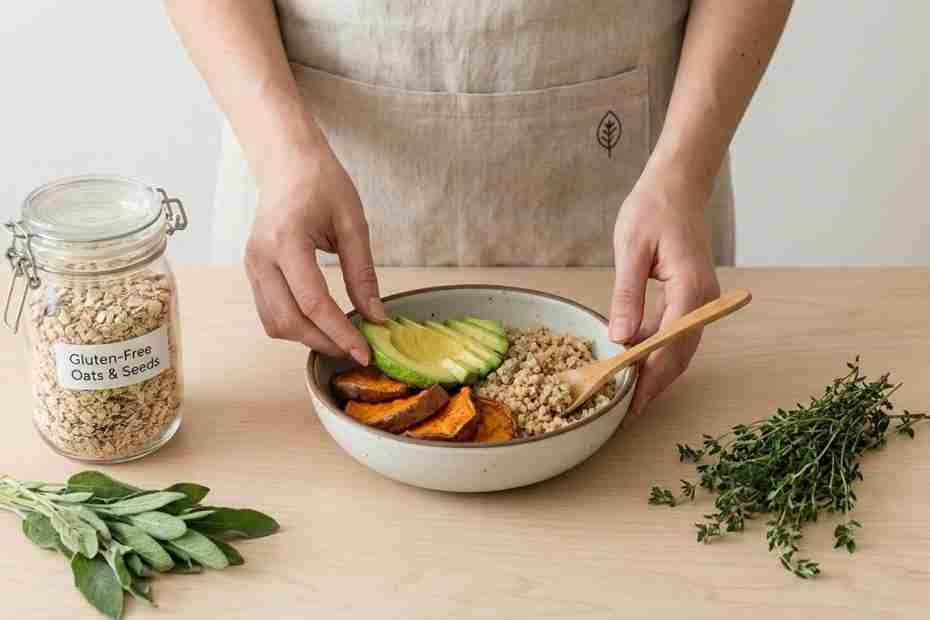
A gluten-free diet can support digestion, but it can also lower your fibre intake fast if you lean on refined gluten-free breads, crackers, pasta, and snacks. The fix is usually simple: build fibre back in with gentler gluten-free foods, increase it gradually, and pair it with enough fluid so your gut can adjust without bloating, cramping, or constipation.
If your stomach has become more sensitive since going gluten-free, you do not need a harsh fibre overhaul. You need smart upgrades that improve stool consistency, support regularity, and reduce the odds of gas, pressure, and post-meal discomfort. The 10 strategies below focus on practical changes you can implement right away, using foods and fibre sources that tend to be better tolerated when your digestion is touchy.
1. Replace Refined Gluten-Free Staples With Higher-Fibre Versions
Many people go gluten-free and assume digestion will improve automatically, then get blindsided by constipation. A common reason is that wheat-based products disappear, but they get replaced with gluten-free foods made mostly from white rice flour, tapioca starch, corn starch, or potato starch. Those products may be safe for gluten avoidance, yet they often deliver very little fibre and very little staying power.
You can improve this fast by checking labels and choosing gluten-free breads, wraps, cereals, crackers, and pasta made with brown rice, quinoa, buckwheat, millet, sorghum, chia, flax, or psyllium. The goal is not to buy anything with the word “whole” on the package. The goal is to identify products that contain real fibre-rich ingredients instead of relying almost entirely on refined starch blends.
This single change matters because packaged gluten-free food often looks healthy while behaving like a low-residue diet. If your bowel movements became less frequent, harder, or harder to pass after cutting gluten, your pantry may be the first place to audit. Upgrading your daily staples builds more fibre into meals you already eat, which is easier to sustain than forcing down foods your stomach does not tolerate well.
2. Use Gluten-Free Oats As Your Daily Soluble Fibre Base
Gluten-free oats are one of the most useful foods you can add when you want more fibre without making your stomach miserable. Oats supply soluble fibre, which can help improve stool form and support steadier digestion. They also fit naturally into breakfast, snacks, and baking, so they work well when you need a repeatable habit instead of a short-term fix.
The important detail is the label. Oats are naturally free of gluten, but they are often contaminated during growing, transport, or processing. If you follow a gluten-free diet for celiac disease, non-celiac gluten sensitivity, or another medical reason, you need oats that are specifically labeled gluten-free.
Start with a modest portion rather than a large bowl. If your gut is sensitive, a smaller serving gives you a cleaner read on tolerance and lowers the chance of bloating. You can fold gluten-free oats into overnight oats, warm porridge, smoothies, meatballs, or homemade bars and build up over several days instead of forcing a big fibre jump in one meal.
3. Add Chia Or Ground Flax In Small Amounts, Not Giant Scoops
Chia seeds and ground flaxseed are useful tools on a gluten-free diet because they add fibre without requiring a full meal overhaul. They also mix easily into foods you may already tolerate well, including yogurt, oatmeal, smoothies, soups, and gluten-free baking. That convenience makes them one of the fastest ways to raise fibre intake without relying on specialty products.
The mistake that causes trouble is dose. Large scoops can backfire, especially if your digestion is already slow or you are not drinking enough water. Sensitive stomachs usually handle these fibres better when you start with a small amount, repeat it consistently, and increase only after your body shows that it is adapting well.
Ground flax is often easier to use than whole flax because your body can access it more effectively. Chia thickens quickly, which some people like and others do not tolerate well at first. If you feel full, gassy, or backed up after adding seeds, the answer is not always to quit. It is often to reduce the amount, spread it across the day, and improve fluid intake.
4. Use Kiwi And Other Gentle Fruits To Improve Regularity
Fruit can help digestion, but not every fruit works the same way when your gut is reactive. Kiwi stands out as a strong option for many people because it supports bowel regularity and is often better tolerated than rougher fibre sources. It also feels manageable. Eating one or two pieces of fruit is simpler than overhauling your entire meal plan.
Berries, oranges, and ripe bananas can also fit well, depending on your tolerance. These foods add fibre and water, which can help soften stool and support more regular bowel movements. They also tend to be easier to work into breakfast or snacks than legumes or large raw salads, which can be harder on an irritated digestive system.
If constipation is your main issue, fruit works best when it becomes part of a daily pattern rather than a rescue move once every few days. Build one fruit serving into the same time of day, watch how your body responds, and keep portions steady before adding more. That rhythm matters more than chasing a dramatic increase all at once.
5. Use Psyllium Husk Carefully When You Need More Stool Support
Psyllium husk is one of the most practical fibre options for people who want better regularity without the harshness of coarse bran. It is a soluble fibre, and it is widely used to support constipation, improve stool consistency, and add bulk in a gentler way than some other fibres. For many gluten-free eaters, it fills the gap left behind when wheat bran and whole-grain wheat products disappear.
Psyllium still requires care. If you take too much too soon, or if you do not take it with enough water, it can leave you feeling more bloated and uncomfortable instead of better. Start with a small serving, use it consistently, and give your gut time to respond before increasing the dose.
You can mix psyllium into water, smoothies, yogurt, or gluten-free baking, but keep expectations realistic. More is not better when your stomach is sensitive. A controlled, low-dose routine will usually outperform a rushed jump to a full serving, especially if your bowel habits are already irregular and your fibre intake has been low for a while.
6. Build Fibre Through Meals, Not Through “Fibre-Boosted” Snack Foods
Packaged foods marketed as fibre-rich can cause more trouble than they solve. Many bars, cereals, cookies, and low-carb products raise fibre numbers with added inulin, chicory root fibre, or other isolated fibres that can trigger gas and pressure in sensitive people. A label may look impressive while your stomach says otherwise.
You will usually get a better result by building fibre from meals made with real gluten-free foods: oats, fruit, potatoes with skin, beans if tolerated, lentils if tolerated, vegetables, nuts, seeds, and higher-fibre gluten-free grains. Whole foods often give you a steadier digestive response because they deliver fibre with water, texture, and a more normal eating pattern rather than a concentrated hit in one bar.
This matters even more if you deal with irritable bowel syndrome-type symptoms, bloating after meals, or constipation mixed with abdominal discomfort. A “fibre” snack product can look like the efficient option, yet it may pack the exact ingredients that make your digestion worse. Read labels with a sceptical eye and let your symptom pattern decide what stays in rotation.
7. Increase Fibre Gradually So Your Gut Can Adapt
One of the fastest ways to create gastrointestinal upset is to raise fibre intake too quickly. Your gut needs time to adapt to extra bulk and fermentation. If you go from a low-fibre gluten-free routine to oats at breakfast, beans at lunch, salad at dinner, fruit between meals, and a fibre supplement before bed, your digestive system will often push back.
A better method is to add one meaningful change, hold it steady, and monitor stool pattern, bloating, fullness, and abdominal comfort. Once that feels stable, add the next change. This pacing helps you identify which foods support regularity and which ones create trouble, so your plan becomes specific to your body rather than based on generic advice.
This gradual build also helps you avoid the common mistake of blaming fibre itself. Many people are not reacting to fibre as a category. They are reacting to the wrong type, too much at once, poor hydration, or a food that is technically healthy but hard for them personally to digest. Slowing down gives you cleaner feedback and better results.
8. Pair Every Fibre Upgrade With More Fluid
Fibre works best when fluid intake rises with it. If you add more fibre but do not add enough fluid, stool can become harder and harder to pass. That is one reason people sometimes report that a “healthy” diet made constipation worse. The missing piece is not always more fibre. It is enough liquid to help fibre do its job.
This does not mean you need to chase extreme water goals. It means you should be deliberate. If you increase oats, add psyllium, use chia, or start eating more fruit and vegetables, make fluid part of the same habit. Keep water easy to access, drink regularly across the day, and pay attention to whether stool is dry, small, or difficult to pass.
Warm fluids in the morning can also help some people establish a more predictable bowel routine. What matters most is consistency. A steady intake supports digestion better than drinking very little all day and then trying to catch up at night after your stomach already feels heavy and uncomfortable.
9. Be Selective With Beans, Raw Greens, Inulin, And Bran-Like Fibres
Some fibre sources are excellent on paper and miserable in practice when your gut is sensitive. Beans, lentils, cruciferous vegetables, large salads, bran-heavy cereals, and products loaded with added inulin may trigger bloating, pressure, and visible abdominal distension. That does not make them bad foods. It means they are not always the best starting point when you are trying to improve digestion without setting off symptoms.
You do not need to avoid these foods forever. You need to control the dose, the form, and the timing. Cooked vegetables may go down more easily than raw ones. A smaller serving of lentils may be fine where a large bowl is not. A little avocado may sit well, while a fibre-fortified bar creates hours of discomfort.
This is where a food diary becomes useful. Track what you ate, the amount, and what happened in the next several hours and the next morning. Patterns usually appear quickly. Once you identify your personal triggers, you can direct your fibre strategy toward foods that improve bowel movements without trading constipation for bloating and cramping.
10. Rule Out Celiac Disease Or Another Digestive Issue If Symptoms Persist
If you suspect celiac disease, do not start a strict gluten-free diet before getting tested. Removing gluten too early can interfere with the diagnostic process and make it harder to get a clear answer. That matters because long-term management is different when symptoms are caused by celiac disease rather than a general reaction to certain foods or a low-fibre diet.
You should also look beyond fibre if constipation, bloating, pain, reflux, diarrhea, weight changes, fatigue, or nutrient issues keep showing up. Persistent digestive symptoms can reflect more than one issue at the same time. A person can eat too little fibre, react to certain fermentable ingredients, and still have an underlying condition that needs medical assessment.
If your symptoms are not improving with sensible changes, or if they get worse as you expand fibre, move from self-management to evaluation. That step protects you from wasting months on random food changes that do not address the real problem. It also helps you avoid staying stuck on a very narrow gluten-free diet that may be making digestion harder, not better.
What Are The Best Gentle Gluten-Free High-Fibre Foods For Digestion?
If you want a practical shortlist, focus on foods that are naturally gluten-free, easier to portion, and less likely to create abrupt bloating. Gluten-free oats, kiwi, berries, chia, ground flax, potatoes with skin, nuts, seeds, and smaller portions of legumes usually make a strong starting lineup. These foods let you build fibre steadily and keep meals familiar.
The best options are not the ones with the biggest nutrition headline. They are the ones you can tolerate consistently. If one food gives you excellent numbers on paper but leaves you swollen and uncomfortable every time, it is not the right lead choice for your digestion plan right now.
Think in terms of repeatable intake. One bowl of gluten-free oats most mornings, one fruit serving daily, one seed add-in, one improved bread or wrap choice, and one higher-fibre dinner side can move your total intake far more effectively than random bursts of “clean eating.” Your gut responds best to steady inputs, not dramatic swings.
How Much Fibre Should You Eat If You Are Gluten-Free And Sensitive To Gastrointestinal Upset?
General guidance often lands around 14 grams of fibre per 1,000 calories, which translates to roughly 25 grams per day for many women and 38 grams per day for many men. Those targets are useful reference points, not day-one marching orders. If your intake is currently low and your stomach reacts easily, your first goal is progress you can tolerate.
A good working plan is to increase gradually until stool consistency, frequency, and comfort improve. If you are sitting at a very low intake, moving up in stages can produce a better outcome than chasing a top-end target immediately. Your digestive system cares about the pace of change as much as the total amount.
The smarter question is not “What is the perfect fibre number?” It is “What amount improves regularity and feels sustainable without creating blowback?” Once you find that range, you can fine-tune food choices and portions. That process is more useful than forcing a universal target onto a gut that is sending clear signals.
What Should You Avoid If Fibre Makes Your Stomach Worse?
If fibre makes your stomach worse, avoid the urge to declare all fibre the problem. Start by cutting back on sudden fibre jumps, oversized servings of raw vegetables, bran-style products, and processed foods loaded with chicory root or inulin. Those items are frequent troublemakers for people who deal with bloating, pressure, or irritable bowel syndrome-type symptoms.
You should also watch the combination effect. A day that includes oats, seeds, beans, a fibre bar, and a large salad can overload your system even if each item seems healthy on its own. Spacing fibre across the day and choosing gentler sources often solves more than eliminating every high-fibre food.
If symptoms continue, reassess food form and meal size. Cooked foods may work better than raw. Smaller servings may work better than “healthy” portions that overshoot your tolerance. Digestion improves when you match fibre type and quantity to your body instead of copying a generic high-fibre template.
How Do You Add Fibre On A Gluten-Free Diet Without Bloating?
- Choose gluten-free oats, kiwi, chia, ground flax, berries, and potatoes with skin.
- Increase fibre slowly, not all at once.
- Pair every fibre increase with more fluid.
- Avoid large doses of bran, inulin, and fibre-fortified snack foods if they trigger symptoms.
Build A Gluten-Free Routine Your Gut Can Actually Handle
You do not need a perfect meal plan to improve digestion on a gluten-free diet. You need better fibre sources, smarter pacing, and enough fluid to support regular bowel movements without triggering bloating or discomfort. Start with the upgrades that deliver the most benefit with the least friction: better staple foods, gluten-free oats, gentle fruit, small amounts of seeds, and careful use of psyllium when needed. Keep the process controlled, track what your body tolerates, and let consistency do the work. If symptoms keep pushing back, get evaluated before you keep restricting foods, because the right diagnosis saves time and usually leads to a much better result.
References
- https://www.bidmc.org/about-bidmc/wellness-insights/gastrointestinal-gi-health/2018/12/tips-for-incorporating-fiber-into-a-gluten-free-diet
- https://odphp.health.gov/our-work/nutrition-physical-activity/dietary-guidelines/previous-dietary-guidelines/2015/advisory-report/appendix-e-3/appendix-e-31a4
- https://www.niddk.nih.gov/health-information/digestive-diseases/celiac-disease/eating-diet-nutrition
- https://www.niddk.nih.gov/health-information/digestive-diseases/constipation/eating-diet-nutrition
- https://monashfodmap.com/blog/research-update-kiwifruit-psyllium-and-prunes-which-one-better-constipation/
- https://www.fda.gov/food/nutrition-education-resources-materials/gluten-and-food-labeling
- https://pmc.ncbi.nlm.nih.gov/articles/PMC3257612/
- https://apnews.com/article/730bdd5f68f448fe979f4ebd598e2340
- https://www.noisyguts.com/blog/gut-friendly-products-that-arent-always-gut-friendly
- https://www.nhlbi.nih.gov/sites/default/files/publications/Your_Guide_to_Lowering_Your_Cholesterol_with_TLC.pdf
- https://www.reddit.com/r/glutenfree/comments/192egbj
- https://www.reddit.com/r/glutenfree/comments/1d90z1r
- https://www.reddit.com/r/glutenfree/comments/1htz5ob