
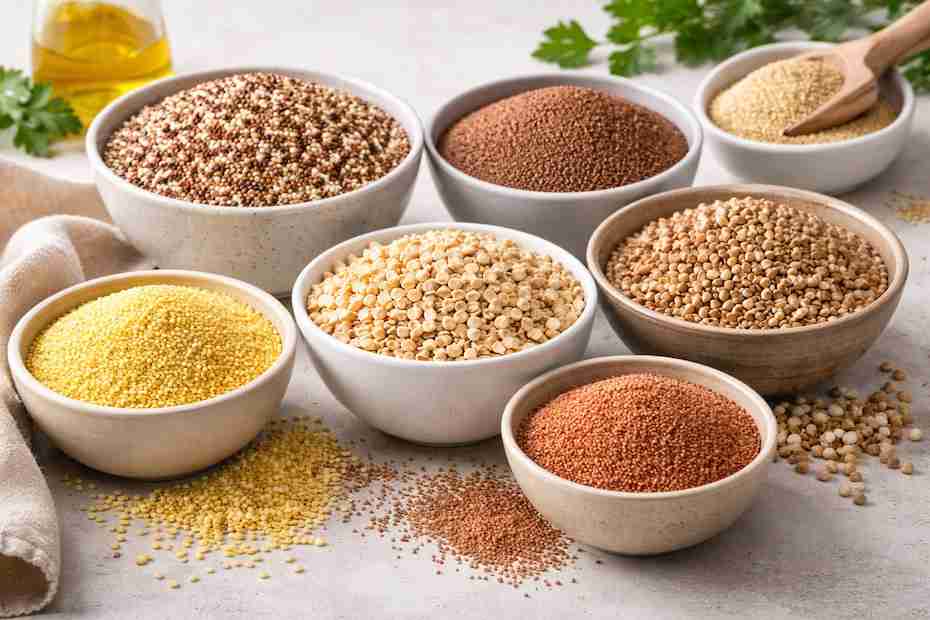
You can build a diverse, satisfying gluten-free diet by using seven naturally gluten-free ancient grains that deliver real nutrition, texture, and flexibility without relying on modern wheat products.
Moving beyond bread changes how you eat and how you fuel your body. This article walks you through seven naturally gluten-free ancient grains, explains how each one performs nutritionally and culinarily, and shows you how to use them with precision rather than guesswork. You’ll gain clarity on selection, preparation, and daily use from the standpoint of long-term dietary execution.
Why are ancient grains valuable in a gluten-free diet?
Ancient grains matter because a gluten-free diet often becomes narrow without deliberate planning. Many people default to rice, corn, or processed gluten-free substitutes that deliver calories but little structural nutrition. Ancient grains widen your options while supporting fiber intake, mineral balance, and sustained energy.
These grains also carry culinary advantages. They offer different textures, cooking behaviors, and flavor profiles that reduce food fatigue. When meals remain varied, adherence improves, which is critical for anyone managing a gluten-free lifestyle long term.
From a nutritional standpoint, ancient grains tend to remain closer to their original seed structure. That means fewer processing losses and greater retention of naturally occurring nutrients. You gain function, not just compliance.
Grain 1: Quinoa as a protein-anchored staple
Quinoa earns its place at the top because it functions as a complete protein while remaining naturally gluten-free. You can rely on it as a structural base in meals where protein balance matters, particularly when animal protein intake fluctuates. That characteristic alone separates quinoa from many other grains.
In practice, quinoa adapts to multiple cooking styles without losing integrity. It holds its shape in salads, absorbs flavor in warm bowls, and reheats without becoming mushy. This reliability matters when you batch-cook or plan meals across several days.
From an execution standpoint, quinoa also integrates easily into familiar formats. You can substitute it directly for rice in most dishes, reducing friction when transitioning away from gluten-dependent meals.
Grain 2: Amaranth for mineral density and texture control
Amaranth delivers a dense nutritional profile in a very small package. Its mineral content supports iron and magnesium intake, which often requires attention on restricted diets. That concentration allows you to extract value from modest portions.
Culinarily, amaranth behaves differently from most grains. When cooked, it forms a creamy structure rather than separating into individual grains. This makes it well-suited for porridges, thickened dishes, and binding applications.
Used intentionally, amaranth adds structure without heaviness. It performs best when paired with complementary textures, allowing you to design meals rather than default to simple starches.
Grain 3: Buckwheat as a functional, savory performer
Buckwheat’s name creates confusion, yet it remains entirely gluten-free. What sets it apart is its strong, earthy flavor profile, which anchors savory dishes without added complexity. You gain depth without relying on sauces or heavy seasoning.
From a nutritional angle, buckwheat contributes fiber and key micronutrients that support metabolic stability. It suits meals built around sustained energy rather than quick digestion. That makes it valuable for longer days or physically demanding schedules.
In the kitchen, buckwheat adapts across formats. Groats work well in bowls and side dishes, while flour performs reliably in pancakes and flatbreads. This flexibility supports consistency without repetition.
Grain 4: Millet for neutral flavor and broad application
Millet operates as a blank canvas within a gluten-free diet. Its mild flavor allows it to absorb surrounding ingredients, making it one of the easiest grains to integrate into existing recipes. You maintain control over flavor outcomes.
Texture shifts based on preparation. Cooked with less liquid, millet remains fluffy and rice-like. With additional liquid, it becomes creamy and spoonable. This adaptability allows you to repurpose a single grain across multiple meals.
Millet also supports dietary balance through fiber and B-vitamin content. It works quietly in the background, strengthening meals without demanding attention.
Grain 5: Sorghum for structure and long-term satiety
Sorghum offers structural integrity that holds up under extended cooking and storage. Its firm texture delivers chew and resistance, which many gluten-free meals lack. That physical structure contributes to satiety and meal satisfaction.
Nutritionally, sorghum emphasizes fiber and plant protein. Meals built around sorghum tend to release energy gradually, supporting steadier blood sugar patterns. That characteristic matters for anyone managing performance, focus, or endurance.
Sorghum works well when treated intentionally. It excels in grain bowls, stews, and even popped applications that add crunch. Used correctly, it replaces refined starches without sacrificing satisfaction.
Grain 6: Teff for compact nutrition and baking performance
Teff’s small size hides a dense nutritional profile. It contributes iron, calcium, and resistant starch, making it valuable for both mineral intake and digestive support. You gain efficiency from relatively small servings.
In culinary terms, teff integrates seamlessly into gluten-free baking. Its fine texture supports structure without overpowering flavor. This makes it useful in flatbreads, pancakes, and blended flour mixes.
Teff also performs well as a cooked grain. Its porridge-like consistency supports breakfast formats and warm savory applications. That versatility supports daily use rather than occasional novelty.
Grain 7: Fonio for speed and global versatility
Fonio stands out for how quickly it cooks. That speed reduces preparation barriers and supports consistent use on busy schedules. You gain access to whole-grain nutrition without extended planning.
Texturally, fonio lands between couscous and fine rice. It absorbs flavor efficiently, allowing sauces and seasonings to carry the dish. This trait makes it adaptable across global cuisines.
Fonio also broadens dietary variety beyond commonly marketed gluten-free grains. Its inclusion strengthens nutritional diversity while maintaining simplicity in execution.
How do you rotate ancient grains without complicating meals?
Rotation succeeds when structure replaces impulse. Assign grains to specific meal roles rather than choosing randomly. One grain anchors breakfast, another supports warm bowls, another handles baking or thickening.
Batch cooking simplifies execution. Preparing two or three grains at once allows you to mix and match components throughout the week. This approach reduces preparation time without narrowing options.
Pay attention to texture contrast. Pair creamy grains with crisp vegetables or firm proteins. Pair chewy grains with lighter components. This balance maintains meal satisfaction without relying on processed substitutes.
What mistakes limit the value of gluten-free ancient grains?
The most common mistake involves treating all grains the same. Each grain responds differently to water, heat, and storage. Ignoring those differences leads to inconsistent results and unnecessary frustration.
Another issue stems from over-reliance on a single grain. Even gluten-free staples lose value when variety disappears. Nutritional balance improves when grains rotate rather than dominate.
Finally, portion mismanagement reduces benefit. Ancient grains support nutrition, yet they remain energy-dense. Structured portions preserve balance while preventing unintended excess.
Naturally gluten-free ancient grains
- Quinoa, amaranth, buckwheat, millet
- Sorghum, teff, fonio
- Naturally gluten-free, nutrient-dense, versatile
Build a gluten-free diet that works long term
Moving beyond bread requires intention, not restriction. Naturally gluten-free ancient grains give you tools to design meals that deliver nutrition, texture, and satisfaction without compromise. Each grain plays a distinct role, and using them strategically strengthens consistency rather than complicating routines. When you rotate wisely, cook with purpose, and respect each grain’s behavior, your gluten-free diet becomes durable instead of limiting. That shift turns compliance into control and variety into strength.
If you want deeper breakdowns like this on food strategy, nutrition planning, and sustainable dietary execution, visit my WordPress profile and explore the full library of related posts.