
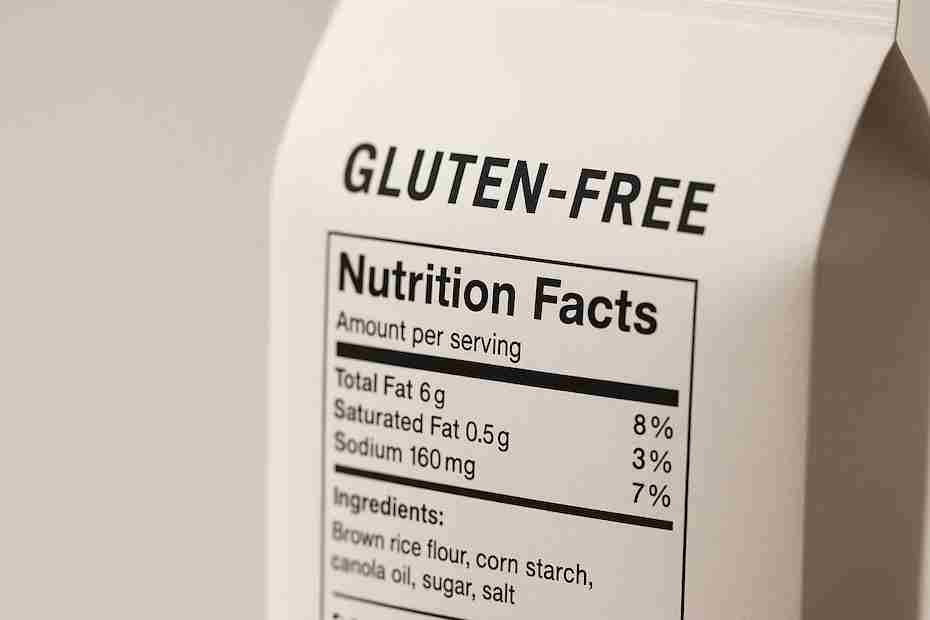
You determine whether a product is gluten-free by checking for an approved “gluten-free” claim, verifying the ingredient list for gluten-containing grains or derivatives, and confirming that it aligns with current labeling standards. You gain confidence by reviewing both the allergen statement and any third-party gluten-free certification on the package.
You’re about to strengthen the way you evaluate packaged foods, especially with the updated ingredient rules entering 2026. This guide gives you the practical system experienced nutrition professionals rely on to assess gluten safety quickly and accurately. You’ll learn how to navigate real-world label formats, identify hidden ingredients, and protect your diet no matter how complex a product may be.
What Defines a Gluten-Free Label in 2026?
A gluten-free product in 2026 must meet regulatory limits requiring the gluten content to stay under 20 parts per million, and the label must exclude wheat, barley, rye, and related derivatives. This standard supports consumers by creating a reliable baseline for packaged foods.
You gain an advantage by understanding that this requirement applies to both naturally gluten-free products and specially formulated replacements. Many manufacturers now use advanced testing to confirm compliance before printing any claim on the package. The regulations also restrict misleading language, so ambiguous claims like “low gluten” or “no wheat” cannot substitute for a verified gluten-free label.
Brands distributing products across regions often follow the strictest international threshold to simplify production. As a shopper, you maximize safety by pairing the gluten-free stamp with a fast scan of the ingredient list to ensure it matches expectations.
How Do You Know if a Product Is Truly Gluten-Free?
You verify a gluten-free product by combining three checks: the gluten-free claim, the ingredient list, and the allergen disclosure. If all three align, you can move forward confidently.
The gluten-free claim is the fastest indicator, but you strengthen your decision-making by reviewing ingredients line by line. Products with added starches, flavorings, or binders may still include gluten-containing derivatives unless regulated properly. You protect yourself by confirming that none of these components come from wheat, barley, or rye.
Your final review includes the allergen statement. If the label notes wheat, the product is unsafe unless clearly marked gluten-free with processed ingredients designed to meet the threshold. When all three areas support the same conclusion, the product meets today’s standards.
Which Ingredients Signal Hidden Gluten?
Hidden gluten often appears under ingredient names that do not immediately reveal their grain source. Terms like malt, modified food starch, and barley extract require a closer look before purchase.
Many packaged goods rely on thickening agents or flavor enhancers that originate from gluten-containing crops. Malt-based products are particularly common in cereals, snacks, and flavored beverages. When you see malt syrup, malt vinegar, or malt extract, you avoid the item unless the label certifies gluten-free production.
Oats require extra attention. Ordinary oats are frequently processed alongside wheat, leading to cross-contact. In contrast, oats labeled gluten-free undergo separate handling, testing, and verification protocols. You stay protected by choosing only certified gluten-free oats.
Key gluten-flag ingredients to watch for:
- Malt or malt extract
- Barley or barley flour
- Wheat starch (unless marked gluten-free)
- Brewer’s yeast
- Bouillon or flavor bases without source clarification
- Oats without a gluten-free certification
Why Is Ingredient Reading More Important Now Than Before?
Updated product formulations and modern processing techniques have increased the number of ingredients that may appear gluten-free but require closer analysis. You navigate the market more effectively by sharpening your label-reading skill.
Brands constantly reformulate items to meet cost targets, enhance texture, or introduce new dietary trends. A product that was gluten-free last year may no longer meet the threshold after a recipe change. Your vigilance becomes essential because ingredient lists shift faster than packaging design.
The rise of global supply chains also influences transparency. Ingredients sourced from multiple countries may follow different production standards. Smart consumers rely on their ability to interpret labels, rather than trusting brand reputation alone. This discipline protects you from unexpected changes that occur even within familiar product lines.
What Do Allergen Statements Tell You About Gluten?
Allergen statements highlight whether wheat is present, but they do not list barley, rye, or other gluten-containing grains. You use the allergen section as one part of your verification process, not the entire answer.
If the allergen statement says “contains wheat,” the product is unsafe unless it carries a validated gluten-free claim and processed ingredients designed to meet the threshold. Some manufacturers also include voluntary precautionary warnings like “may contain wheat” or “produced in a facility with wheat,” which alert you to higher cross-contact risk.
Since current allergen rules do not require barley or rye disclosure, a product may appear safe based on the allergen section alone. You fill this gap by reviewing the full ingredient list and certification status to secure a complete picture of risk.
How Helpful Are Gluten-Free Certifications and Symbols?
Certifications provide an added layer of verification because they involve testing, manufacturing audits, and process reviews. You gain confidence when you see a trusted gluten-free symbol from reputable certifying bodies.
Certification programs apply strict testing protocols and often exceed regulatory minimums. Many certified gluten-free products fall below the 20 ppm threshold, offering additional assurance for sensitive consumers. This benefit is especially valuable with baked goods, processed snacks, and products containing complex flavor blends.
When you incorporate certified products into your routine, you reduce the amount of research required on every grocery trip. Symbols act as shortcuts, speeding up your decision-making and reducing the stress of constant label analysis.
What Should You Check First When Evaluating a Food Label?
You move efficiently by scanning labels in a consistent order: gluten-free claim, allergen statement, ingredient list, and certification mark. This sequence improves speed and accuracy when shopping.
Start with the gluten-free designation. If it’s present, move to ingredients to confirm they match the claim. Then evaluate the allergen section for wheat disclosures or contamination warnings that could undermine safety.
After that, you look for certification marks if available. You treat certifications as supporting evidence that aligns with the rest of the label. Using this structured system ensures you never overlook an important detail.
How Do You Handle Local Bakeries, Restaurants, and Fresh Foods Without Labels?
You rely on clear communication and ingredient knowledge when buying foods without packaged labels. Asking direct questions provides the clarity that packaged goods deliver through standardized labeling.
Restaurants vary widely in their handling of gluten-containing ingredients. A dish may appear gluten-free, but sauces, marinades, or flavor bases could introduce gluten without being obvious. Your questions about preparation methods, sourcing, and equipment help reduce uncertainty.
Local bakeries require extra caution because grain flours circulate easily in the air during production. Even gluten-free bakery items may face contamination risks. You choose bakeries that specialize in gluten-free production or maintain separate preparation spaces for maximum safety.
How Have Updated Regulations Improved Your Gluten-Free Purchasing Experience?
The current labeling standards introduced across global markets have created greater consistency for gluten-free claims. You benefit from clearer language, better allergen disclosure practices, and stronger enforcement around misleading terms.
Manufacturers now face tighter controls on how they formulate gluten-free products, ensuring they do not exceed legal thresholds. This gives you a stronger foundation when making purchasing decisions. Ingredient clarity has become a priority for many companies, which helps you determine safety more quickly.
These improvements support your confidence but do not replace your responsibility to review each package. Staying informed ensures you stay ahead of recipe changes, sourcing variations, and new manufacturing techniques entering the marketplace.
Fast Gluten-Free Label Guide
- Look for an approved gluten-free claim.
- Scan ingredients for wheat, barley, rye, malt, or uncertified oats.
- Prefer certified gluten-free products for higher assurance.
Strengthen Your Gluten-Free Confidence
You protect yourself every time you read a label with precision and consistency. The updated 2026 standards give you a more reliable baseline, yet the real power comes from the discipline you apply when scanning for hidden risks. By reviewing ingredient lists, allergen disclosures, certifications, and preparation details, you maintain full control over your gluten-free lifestyle. The more consistent your evaluation routine becomes, the easier it is to navigate every grocery aisle and restaurant menu with confidence.
If you found this guide helpful and want to explore more food-safety insights, feel free to connect with me at my x profile.